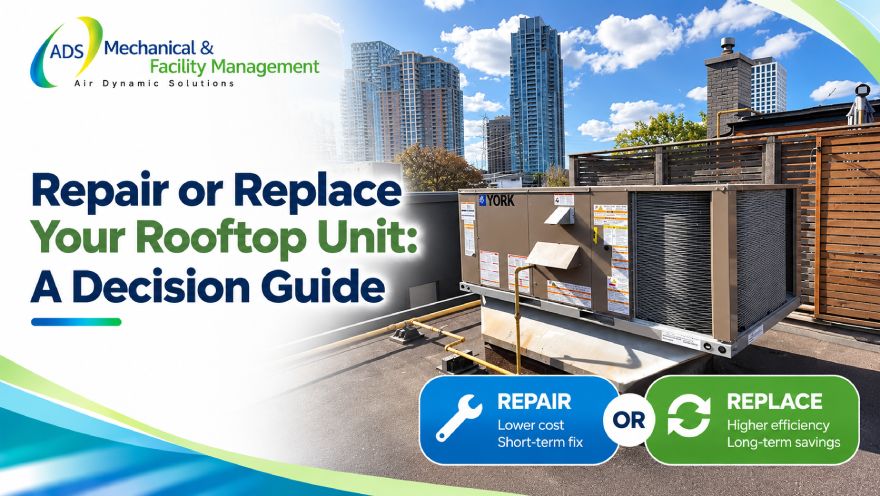
A rooftop HVAC unit rarely breaks down on a mild, quiet morning. Failures almost always strike during the peak of an Ontario summer heatwave or a winter freeze, leaving facility managers with mounting tenant complaints, stalled operations, and only hours to approve a major expense. Under that pressure, signing off on a quick fix feels like the safest move because it keeps immediate spending low. However, that reactive habit often traps businesses in a costly cycle of repeat service calls, overtime fees, and unexpected breakdowns.
Making the right call means looking past the immediate stress of a broken part and judging the unit as a long-term business investment. By using a simple three-part framework, checking the unit’s age, weighing repair costs, and spotting hidden energy waste, you can quickly tell which units are worth saving and which ones are draining your budget. Even better, pairing a planned upgrade with an equipment buyback program turns your old rooftop unit into an upfront cash credit, making replacement a much smarter financial choice.
What Emergency Repairs Actually Cost Your Business
Overtime Service Rates
When a rooftop unit fails outside regular business hours, labor rates climb fast because commercial contractors charge 1.5x to 2x their normal rates for nights, weekends, and holidays. Since diagnosing and fixing rooftop equipment takes several hours, a simple afternoon repair can easily turn into a multi-thousand-dollar emergency bill before any new parts are even installed.
Lost Revenue and Productivity
The contractor’s invoice is rarely the biggest financial loss during an unexpected HVAC outage. Uncomfortable indoor temperatures drive retail shoppers away, slow down warehouse teams, and can even trigger rent discounts for commercial tenants. You can see the true cost of a breakdown by multiplying your hours of downtime by your hourly business loss and adding the repair bill on top, which almost always costs far more than planned maintenance.
Rush Crane and Equipment Markups
If an emergency breakdown forces you to replace a unit right away, rushing the job takes away your ability to shop smart. Booking a commercial crane on short notice brings steep rush fees, municipal permit delays, and high minimum charges. On top of that, tight deadlines force you to settle for whatever models happen to sit in a local warehouse, rather than getting better pricing and utility rebates on a high-efficiency system.
Check Your Unit’s Age and Remaining Lifespan
0–7 Years Old (Repair It)
During its first seven years, a commercial rooftop unit is in the prime of its life and is usually covered by a factory parts warranty for major components. Unless the system has suffered heavy damage from severe weather, power surges, or poor upkeep, repairing a single faulty part is almost always the smartest move.
8–14 Years Old (Compare Your Spend)
Once a rooftop unit passes the eight-year mark, factory warranties have usually expired, and everyday parts like blower motors and switches start wearing out faster. At this stage, never judge a repair quote on its own; instead, add the new estimate to everything you spent on repairs over the last two years to see if your budget is quietly propping up a failing machine.
15+ Years Old (Replace It)
Most commercial rooftop units are built to last about 15 to 20 years, depending on local weather extremes and how hard they run each day. Spending thousands of dollars to fix a unit past year 15 rarely pays off, because repairing one worn-out part simply puts extra strain on other aging components that are already close to failing.
Apply the 50% Repair Cost Rule
The 50% Rule
Facility managers follow a clear rule of thumb: if a single repair costs half or more of what a brand-new rooftop unit costs, it is time to replace it. Paying half the price of a new system to patch an old one leaves you without a fresh warranty, keeps your older energy ratings, and leaves the rest of the unit’s worn parts open to future breakdowns.
The Age-Adjusted Formula
Because a major repair means something very different on a newer unit than on an older one, multiplying the unit’s age by the repair cost gives you a much clearer test. When that combined number reaches 50% to 60% of a new unit’s price, replacement becomes the wiser financial choice, helping you catch aging money pits before a sudden failure forces your hand.
Major Red-Flag Repairs
Certain breakdowns serve as clear warning signs on any unit that is out of warranty. A burned-out compressor, a cracked heat exchanger, or a leaking coil takes heavy labor, crane work, and full refrigerant handling to repair. Treating these major failures as an automatic signal to get a replacement quote keeps you from pouring big money into a worn-out core system.
Measure Energy Waste and Refrigerant Risks
Rising Monthly Power Bills
Even when an older rooftop unit seems to run fine, normal wear and tear and older motor designs cause it to lose 20% to 30% or more of its original efficiency over time. Switching to a modern high-efficiency unit lowers your monthly power usage right away, helping your utility savings pay back a large part of your upfront investment.
Obsolete Refrigerants
Canadian environmental rules have phased out older R-22 refrigerants and are steadily reducing high-GWP refrigerants like R-410A in favor of newer, cleaner alternatives. While existing R-410A units can still be serviced, tightening supply limits mean repair refrigerants will keep getting harder to find and more expensive to buy. Paying for a major refrigerant leak repair on an aging unit locks your business into higher service bills for the rest of that unit’s life.
How an Equipment Buyback Program Lowers Your Replacement Cost
Turn Old Units Into Cash Credit
Standard HVAC replacements treat your old rooftop unit like pure trash, often adding crane removal, hauling, and disposal fees to your final bill. An equipment buyback program flips that setup by checking your old unit for useful parts, like working compressors, copper coils, and aluminum, and paying you for its leftover value.
Cut Upfront Capital Costs by 10% to 20%
Instead of waiting months for a scrap check, a buyback credit comes straight off your replacement quote, lowering your upfront cost right away. When you combine that instant trade-in value with local commercial utility rebates for high-efficiency equipment, the price gap between a big repair and a brand-new system shrinks fast.
One Simple Removal Process
Juggling separate crane crews, certified refrigerant techs, and haul-away trucks creates extra stress and scheduling delays for busy property managers. With a turnkey buyback program, one certified team safely recovers the refrigerant, lifts off the old unit, sets the new unit in place, and hauls away the retired equipment in a single planned visit.
Final Analysis
You should repair newer units that have minor, isolated problems, and proactively replace older systems before major breakdowns eat into your operating budget. As a trusted source for commercial HVAC lifecycle planning and turnkey replacements across Toronto and the GTA, Air Dynamic Solutions helps facility managers make clear, confident choices. Request a free RTU assessment and buyback quote from Air Dynamic Solutions today to lock in your unit’s trade-in value before your next breakdown.
Frequently Asked Questions
How long does a commercial rooftop HVAC replacement take from start to finish?
Most planned rooftop unit replacements take only one day on-site once the new equipment arrives, minimizing disruption to your building occupants. Behind the scenes, equipment lead times and local crane permits usually take two to six weeks depending on unit tonnage and custom curb adapters, which is why scheduling ahead beats waiting for a total breakdown.
Can I replace just one rooftop unit if my building has multiple aging RTUs?
Yes, you can replace failing units one at a time, though bundling two or more replacements into a single project often reduces your per-unit crane and rigging fees. If multiple units were installed during the same year, inspecting all of them at once lets you stagger upgrades across budget cycles while locking in volume buyback pricing.
What happens to my roof curb when upgrading to a new rooftop unit?
When you choose a new rooftop unit with the exact same footprint as your existing model, technicians can mount it directly onto your current roof curb without cutting into your roof membrane. If you switch brands or upgrade to a different cabinet size, a custom prefabricated curb adapter bridges the difference cleanly while keeping your roof warranty intact.
Are flexible financing or rental options available for commercial RTU replacements?
Yes, commercial property owners do not always have to pay the entire replacement cost upfront out of capital reserves. Many providers offer tailored monthly financing plans, equipment rental options, and local Ontario energy-efficiency rebates to help match your payments with your building’s monthly cash flow.
What information do I need for an accurate RTU buyback quote?
You only need the unit’s manufacturer name, model number, serial number, and overall physical condition from the metal data plate on the side of the cabinet. Sharing a few clear photos of the unit or scheduling a quick on-site walkthrough allows technicians to calculate your exact trade-in credit and confirm crane requirements without interrupting your daily operations.