
Air Dynamic Solutions delivers commercial refrigerant leak repair services handling detection, recovery, circuit restoration, evacuation, and verified recharge for commercial refrigeration and HVAC‑R systems across the GTA and Ontario. Our licensed technicians pinpoint leaks with precision, repair circuits to specification, and recommission systems with documented performance checks to help support compliance with Canadian refrigerant handling standards and restore dependable operation.
Our refrigerant leak repair in Toronto services support commercial kitchens, hotel properties, food retailers, and pharmaceutical storage facilities. We also serve cold chain logistics operations, automotive dealerships, office buildings, and multi‑location corporate clients when refrigerant leaks affect HVAC‑R and refrigeration system performance across Ontario. With refrigeration licensing, TSSA certification, and over 20 years of commercial HVAC‑R experience, our technicians manage the complete leak repair process. They handle confirmed leak location, regulated recovery, circuit repair, evacuation, and performance‑verified recharge.
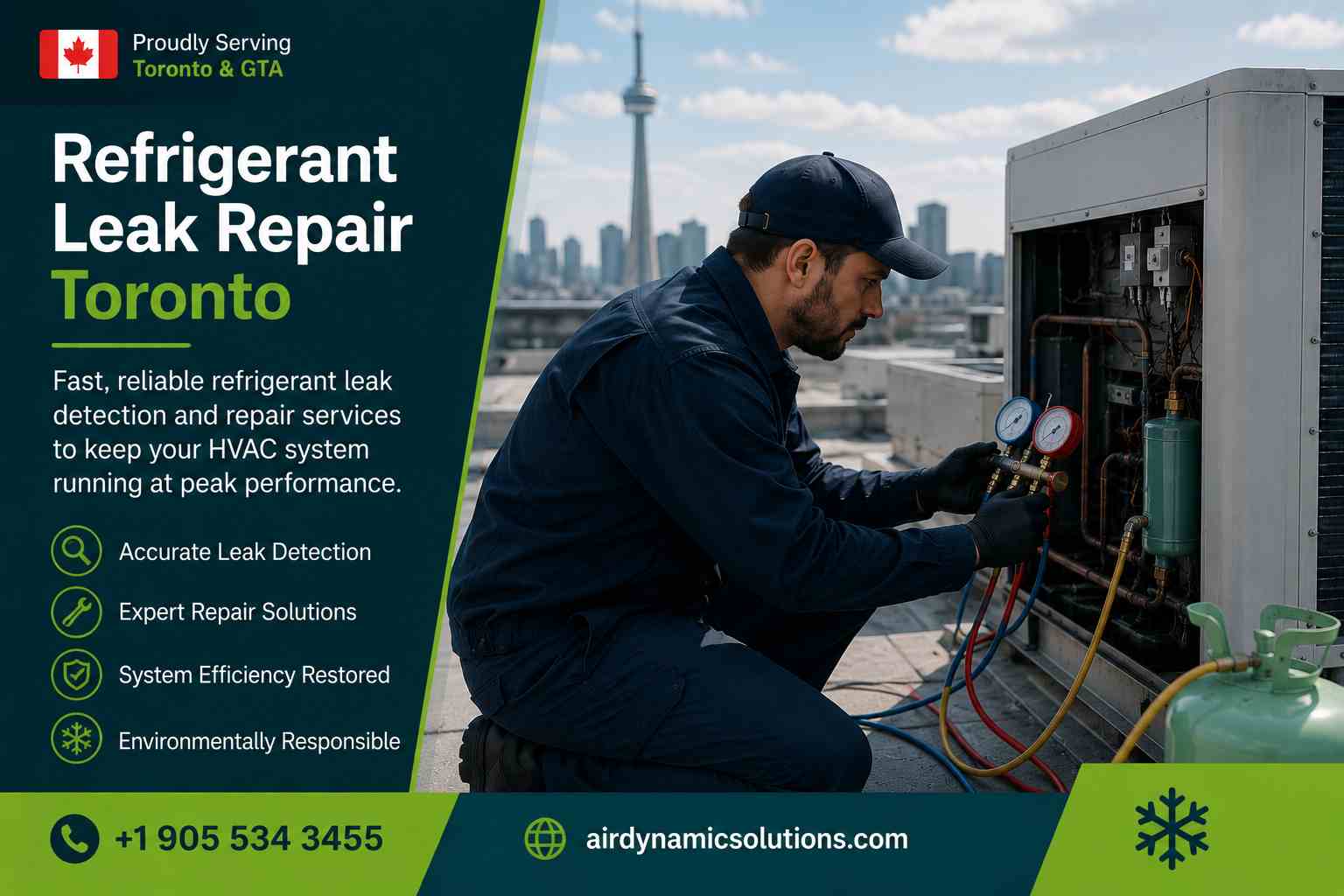





Our refrigerant leak repair services locate refrigerant leaks using electronic leak detectors calibrated for the specific refrigerant type in the circuit, covering both current and legacy commercial refrigerants. Our technicians conduct detection systematically across the entire refrigerant circuit, including evaporator and condenser coils, compressor connections, service valves, and interconnecting refrigerant piping.
We recover refrigerant from the affected system using certified recovery equipment before any repair work begins. Our team documents recovered refrigerant quantities by weight and type to help support compliance with Canadian environmental regulations governing ozone‑depleting substances and high‑GWP refrigerants. Recovery documentation is maintained as part of the service record for each system.
Refrigerant leaks at brazed joints, flare connections, compression fittings, and service valve packing require distinct repair approaches based on connection type and refrigerant service conditions. Our comprehensive refrigerant leak repair includes brazed joint failures using silver‑phosphor alloy brazing under nitrogen purge, a procedure that helps reduce internal oxidation of the copper circuit during the repair.
We recharge the circuit to the manufacturer-specified charge weight or to verified superheat and subcooling targets appropriate to the system type and operating conditions. Our post-recharge performance verification covers suction and discharge pressure readings, superheat at the evaporator outlet, subcooling at the condenser outlet, and temperature differential across the evaporator load.
We locate and confirm the leak point before opening the circuit, so every repair step is directed at a confirmed fault.
Our certified technicians follow Canadian refrigerant regulations with mandatory recovery and documentation to help support compliance.
Our technicians apply strict circuit standards, including nitrogen‑purged brazing, proper evacuation depth, and charge verification.
We check post‑repair performance with operating readings and document results to help confirm the system runs within design specifications.

Small refrigerant leaks can remain for extended periods before charge loss becomes significant enough to affect system operating pressures or temperatures. Electronic leak detection helps identify refrigerant concentration at leak points well below the threshold detectable by operating condition observation. We recommend periodic electronic leak checks as part of refrigeration system maintenance programs, especially for systems where charge loss history or equipment age suggests a leak risk.
Coil repair is appropriate when the leak is at an accessible location, the coil material remains in sound condition adjacent to the leak point, and the coil configuration allows a quality braze repair. Coil replacement becomes the more practical option when the leak is within an inaccessible coil section, when corrosion or mechanical damage extends beyond the leak point, or when the coil is of an age and condition where a second leak at another location is a realistic near‑term prospect.
Refrigerant type influences recovery equipment selection, evacuation depth requirements, recharge method, and the regulatory documentation required for that refrigerant. High‑GWP refrigerants subject to phase‑down schedules under Canadian regulations need added attention to recovery completeness and documentation. Our technicians are trained and equipped to handle the current range of commercial refrigerants in active use.
Repair time depends on the location and accessibility of the leak, the complexity of the circuit repair, and the system volume that governs evacuation time. A straightforward brazed joint repair on an accessible section of refrigerant piping — including recovery, repair, pressure test, evacuation, and recharge — can usually be completed within a single service visit.
Let’s arrange a leak detection assessment, discuss an active refrigerant loss, or schedule a circuit repair for your Ontario commercial system with our certified technicians.
This website uses cookies to enhance navigation, analyze site usage, and provide relevant content and advertisements. By using this website, you agree to our use of cookies as described in our Privacy Policy. You may accept, reject, or manage optional cookies at any time.