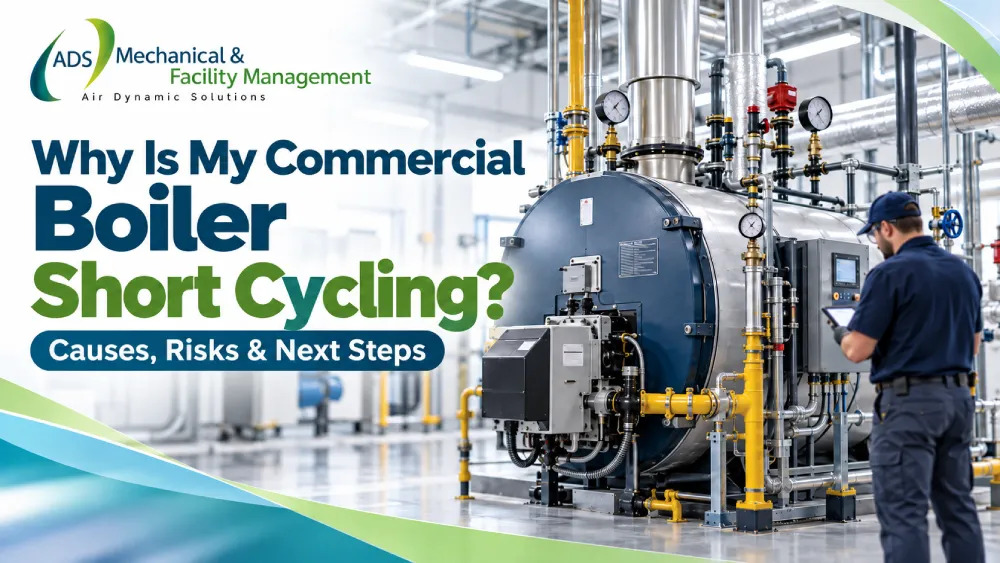
You might notice your commercial boiler cycling on and off every few minutes. It leaves parts of the building freezing while energy bills quietly skyrocket. In the heating world, people call this rapid behavior commercial boiler short cycling. It is one of the most critical warning signs a manager can face. Boilers are built to run in steady cycles to spread warmth efficiently. It signals a big problem when the machine performs these quick bursts instead. The warmth created by the burner simply cannot be absorbed by the building setup. This leaves your equipment trapped in a damaging loop of constant restarts.
You will face huge financial and operational disasters if you ignore this issue. Beyond the frustration of cold rooms and tenant complaints, this on-and-off habit destroys the machinery. It forces the fan to blow cool air through the system during every single restart. This literally wastes expensive fuel out the chimney while putting heavy stress on metal parts. It can cut a twenty-year lifespan down to less than a decade. You will eventually face total equipment failure along the way. In this guide, we will look at the real reasons behind the trouble and how you can fix it.
What Exactly is Commercial Boiler Short Cycling?
Normal vs. Boiler Short Cycling
You can understand a broken heater better by looking at how a healthy one behaves. In a good setup, it fires up and runs continuously for twenty or thirty minutes. It does this to reach peak efficiency and satisfy the thermostat properly. It breaks this routine during boiler frequent cycling by turning on and off every few minutes. It can easily repeat this process ten times in a single hour. It forces the machine to spend most of its time in a volatile startup phase rather than letting things run smoothly.
The Thermodynamic Imbalance
It is not just a random computer glitch or a minor electrical hiccup. At its core, this problem is a basic breakdown in how heat moves through the building. You need the warmth from the burner to match the speed of the water or steam lines. It means the system is dumping energy into the machine too fast when short cycling happens. It cannot carry that heat away quickly enough through the main pipes. It causes internal pressure to spike almost instantly because of that trapped energy. It then forces the safety controls to trip the unit off so nothing overheats.
The Root Causes: Why is Your Boiler Short Cycling?
System Sizing & Design Issues
It is very common for big engineering mistakes to cause this rapid on-and-off behavior. In many older buildings, people used to think that a bigger machine was always better. They installed giant heaters for cold days that rarely ever happen now. It will generate far too much heat for the building to handle during normal weather. You will face immediate shutdowns because the indoor temperatures shoot up too fast.
This problem gets much worse if you have an old burner with a poor settings range. It cannot turn its flame down low enough to match a mild afternoon or a small heating zone. Furthermore, new high-efficiency heaters use very small internal tanks. They do not have enough water to absorb sudden bursts of energy. This leads to quick temperature spikes that repeatedly turn the system off.
Fluid Dynamics & Flow Restrictions
You will see immediate cycling when the pipe setup fails to move heat away from the utility room. It happens over time because untreated water leaves thick sludge and mineral crust inside the metal pipes. This dirty layer creates a barrier that stops warmth from moving into the building lines.
It tricks the internal sensors into thinking the machine is overheating when the actual rooms are freezing. You might also face physical air bubbles that completely block the water flow. It can happen because of a broken pump or a stuck valve outside. It forces the flame to heat a stagnant pool of trapped liquid. It reaches its maximum limit almost instantly and chokes the system into a fast shutdown.
Control Strategies & Electrical Malfunctions
It can also happen because of bad computer settings or broken electronic safety sensors. You might have an issue where the controller has a very tight temperature window. It leaves no breathing room if the gap between turning on and shutting off is only a couple of degrees. It will cycle furiously to maintain that impossible balance.
On the hardware side, you might deal with a dirty flame scanner or a bad sensor rod. It assumes there is a dangerous gas leak if it cannot detect the fire within a few seconds. It cuts the fuel lines instantly to keep things safe. It then cleans the chamber and tries to light the fire again a moment later.
Why Commercial Boiler Short Cycling Is Costing You a Fortune
Fuel Bill Inflation
You will see a massive spike in utility costs because every quick restart forces the machine to use extra power. It triggers a safety cleaning process right before the fire lights and after it turns off. This step blows cold room air straight through the heating core. It absorbs the warmth inside and sends your expensive energy right out the chimney. You lose up to fifteen percent of your overall fuel efficiency because the machine spends its life restarting instead of burning steadily. It forces building owners to pay top dollar for heat that never actually reaches the indoor rooms.
Thermal Shock & Mechanical Trauma
You subject the internal metal walls to extreme stress when the system constantly switches between hot fire and cold air. It causes the heavy steel tubes or cast-iron parts to expand and contract too fast. They cannot handle that constant bending back and forth every single minute. It surpasses what the metal can naturally take over time. This ongoing movement cracks the thick metal and breaks the factory welds. It creates major leaks inside the main heating block that are incredibly difficult and expensive to patch up.
Premature Component Burnout
You will also put immense pressure on the electrical parts because of this constant on-and-off pacing. It wears down the gas valves, igniters, and switches long before they should normally fail. They have a strict lifetime limit on how many times they can click on and off. It can easily waste that lifetime budget in just a few seasons. This cuts a twenty-year machine lifespan down to less than seven years. It forces managers into a stressful loop of emergency fixes, ongoing part replacements, and early system upgrades.
Tenant Discomfort
You cannot keep the indoor climate comfortable when a heater fails to run for a steady amount of time. It shuts off too quickly for the hot water to travel all the way through the building pipes. This creates terrible hot and cold spots across different offices and floors. It leaves rooms near the maintenance area way too hot while far corners remain completely freezing. This uneven temperature ruins workplace focus, threatens your lease agreements, and breaks trust with your renters.
How to Diagnose and Fix the Issue
Conduct the “Low-Fire Lock” Test
You can coordinate this special commercial boiler troubleshooting to find out whether the trouble is a water restriction or a size problem. By using the manual override switch, a professional can temporarily keep the burner running at its lowest flame level. It rules out a blocked pipe or a broken pump completely when the machine runs smoothly for a long time under this setting. This continuous test proves that you are dealing with a machine that is simply too big for the building. It could also mean the control system is overreacting to tiny shifts in indoor temperatures.
Re-calibrate Control Differentials
You should widen the temperature or pressure windows inside the controller software when the pipe tests show everything is clear. This fix is highly cost-effective because many rapid cycling problems start from overly tight software tuning. It will turn off the burner instantly when it drifts just a couple of degrees away from the target goal. By changing the aquastat settings to a wider gap, you give the equipment crucial breathing room to satisfy building demands. It will then run for a much longer and more sustainable time before shutting down.
Perform a System Flush
You must clear out the main core when the sensors show a bad heat bottleneck inside the machine. A specialized mechanical team will pump scale-dissolving chemicals through the lines to strip away decades of thick crust and baked-on sludge. This allows warmth to transfer properly into the building water lines again once the metal surfaces are clean. By installing magnetic dirt separators in the return pipe, you can permanently catch traveling metallic debris. It ensures the sensors receive accurate readings without any thick dirt layers blocking the view.
Infrastructure Upgrades
You might need to invest in physical equipment changes when the main machine is permanently oversized for your building zones. It helps to add an insulated water buffer tank into the primary loop to inject artificial weight that small modern heaters lack. This upgrade gives the setup a much larger pool of liquid to warm up so things do not shut off every few minutes. You can also install a tiny secondary heater alongside the primary unit to manage mild autumn weather efficiently. It allows the giant main burner to rest until extreme winter weather requires its full strength.
Final Analysis
Commercial boiler short cycling is never just a minor operational quirk because this rapid behavior shows a deep problem inside your building heating setup. It quietly drains your facility operating budget while actively ruining expensive heavy-duty equipment. You will face premature component burnout and highly disruptive tenant complaints by allowing this bad pattern to continue. It wastes fuel through continuous cleaning cycles and causes structural cracks from extreme temperature shifts. You should not wait for a total winter breakdown to fix these underlying water, size, or computer dynamics. You can contact our certified commercial HVAC team at Air Dynamic Solutions today for a full equipment audit. We will optimize the setup to restore proper warmth, slash your utility bills, and protect your capital investment before the next deep freeze hits.
FAQs
Why does a commercial boiler short cycle?
It happens when a big imbalance occurs between the heat created by the burner and the building’s ability to take it in. You will usually experience this because of an oversized machine, blocked water paths, or wrong computer settings.
Is boiler short cycling serious?
Yes, it is highly serious. You will face inflated fuel bills by up to fifteen percent because of this ongoing issue. It causes extreme temperature shock that cracks heavy metal parts. This bad habit slashes a twenty-year equipment lifespan down to less than seven years.
Can poor water flow cause boiler short cycling?
Yes. With restricted water paths from limescale buildup or broken pumps, the warmth cannot leave the machine core. It causes internal temperature sensors to shoot up almost instantly. It then trips the safety controls to turn everything off.
Can boiler controls cause short cycling?
Yes. With a very narrow temperature or pressure window programmed into the software, the machine will constantly click on and off. It struggles to maintain that overly rigid setting. You will also deal with automatic safety resets from dirty or broken fire sensors.
How does short cycling affect boiler performance?
It heavily lowers efficiency and creates uneven indoor temperatures. Because the system spends its life running heavy startup phases and cold safety purges, it blows expensive fuel straight out the chimney. It wastes this energy instead of warming up your building rooms.
When should a commercial boiler be professionally inspected?
You should book an inspection immediately when the system turns on and off more than eight times in a single hour. It is also wise to schedule a check during routine annual winter maintenance. This helps you catch underlying flow or control issues before a total breakdown occurs.