Air Dynamic Solutions offers commercial rooftop HVAC units in Toronto, including installation, optimization, and ongoing maintenance for the GTA and Ontario commercial facilities, as well as specialized solutions like Cooling Package RTU’s for diverse building needs. Our technicians with extensive rooftop system expertise handle system performance management, efficiency optimization, and equipment reliability.
Air Dynamic Solutions team designs rooftop HVAC unit placements, optimizes equipment performance, schedules preventive maintenance through programs such as HVAC preventive maintenance, manages refrigerant systems, and coordinates equipment modifications. We serve office buildings, retail complexes, hospitality operations, healthcare facilities, logistics centers, and industrial properties across Ontario.
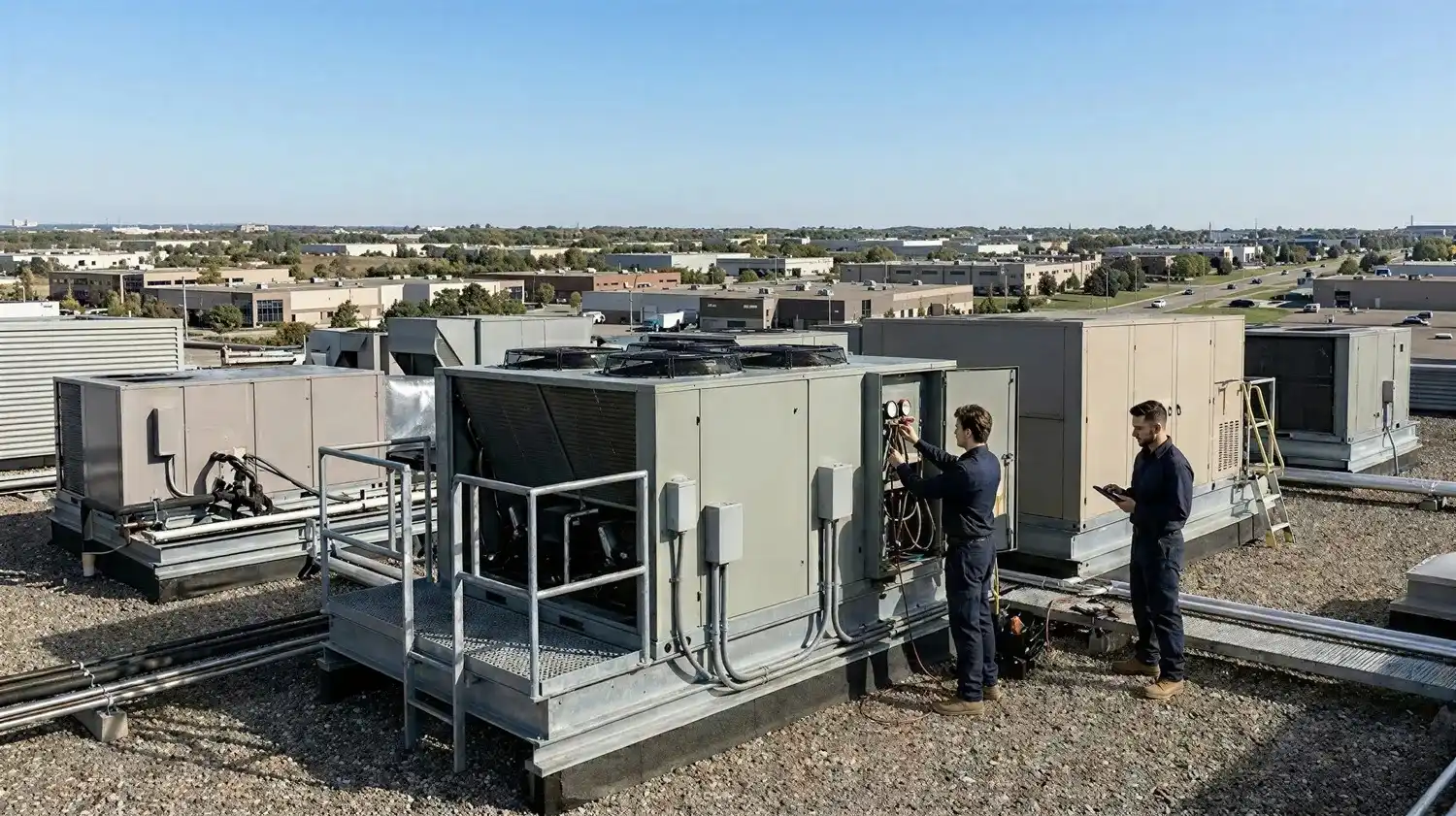



Our team focuses on careful assessment of structural capacity, weight distribution, vibration isolation, and weather exposure during the rooftop installation process. Our structural engineers evaluate rooftop air conditioning unit load-bearing capacity and support requirements, and vibration isolation systems help prevent noise and vibration from transmitting through the building structure.
Our performance verification examines airflow delivery, temperature differential achievement, and capacity under actual load conditions. Our team conducts thorough testing, which identifies equipment operating at reduced efficiency or components requiring attention. We also prepare performance documentation of the RTU HVAC that enables comparison across equipment lifecycles.
ADS' proper documentation supports operational planning, aids technician troubleshooting, and demonstrates systematic oversight. Equipment records capture installation date, manufacturer specifications, warranty information, and modification history. Our organized RTU HVAC documentation is helpful in facilitating decisions regarding equipment replacement timing.
Air Dynamic Solutions’s early identification of components approaching end-of-life helps prevent unexpected failures during peak demand periods. Our strategic lifecycle management optimizes equipment replacement planning and minimizes operational disruptions. Our rooftop systems' extensive maintenance process supports rooftop units' smooth operational flow during defined lifecycles.
Our team maintains familiarity with equipment specifications, manufacturer requirements, and applicable installation standards.
Our electrical circuit analysis and visual inspection capture visible component condition, refrigerant line integrity, and vibration isolation status.
We provide a coordinated and unified approach to facility management across diverse locations with standardized protocols.
Leading brands, including Marriott, Hilton, Mazda, Hyundai, Goodyear, and Legrand, rely on our expertise for their facility operational reliability.

Rooftop load capacity varies by building design and structural age. Equipment weight, support structure requirements, and vibration isolation needs must align with rooftop structural capabilities. Structural assessment precedes equipment selection to ensure adequate support and safe installation. We coordinate with building engineers to evaluate rooftop capacity before finalizing equipment specifications.
Equipment performance varies with outdoor temperature extremes. Winter operation requires attention to refrigerant circulation and heating cycle efficiency. Summer peak demand periods stress cooling capacity and condenser performance. Seasonal adjustments, including refrigerant charge verification, thermostat recalibration, and fan speed optimization, maintain efficiency across temperature ranges.
Rooftop unit noise and vibration can transmit through the building structure to occupied spaces below. Equipment placement distance from occupied areas and HVAC ductwork routing affect noise transmission. Vibration isolation equipment performance depends on proper selection and installation. Sound-dampening measures, including protective barriers and flexible connections, reduce transmission to the building interior.
Equipment age, repair history, efficiency trends, and refrigerant availability influence replacement decisions. Equipment beyond 15-20 years typically approaches the economic replacement point. Increasingly frequent repairs indicate declining reliability and rising maintenance costs.
Reach out to our team to schedule a performance assessment, discuss system optimization, or address rooftop equipment requirements.
This website uses cookies to enhance navigation, analyze site usage, and provide relevant content and advertisements. By using this website, you agree to our use of cookies as described in our Privacy Policy. You may accept, reject, or manage optional cookies at any time.