Air Dynamic Solutions delivers across commercial properties, industrial facilities, and institutional buildings. Our certified technicians employ advanced measurement instruments to assess system performance, identify distribution discrepancies, and implement targeted adjustments that align HVAC operations with design specifications. Our comprehensive HVAC preventive maintenance program holistically helps resolve your facility’s maximum operational issues before they occur.
Our commercial air balancing in Toronto supports consistent performance aligned with the commercial structural engineer’s design and intent. Our technicians are certified under AABC, NEBB, and SMACNA protocols, ensuring compliance with Canadian TAB standards. Our is designed to serve office complexes, retail environments, healthcare facilities, government buildings, educational institutions, and manufacturing operations.
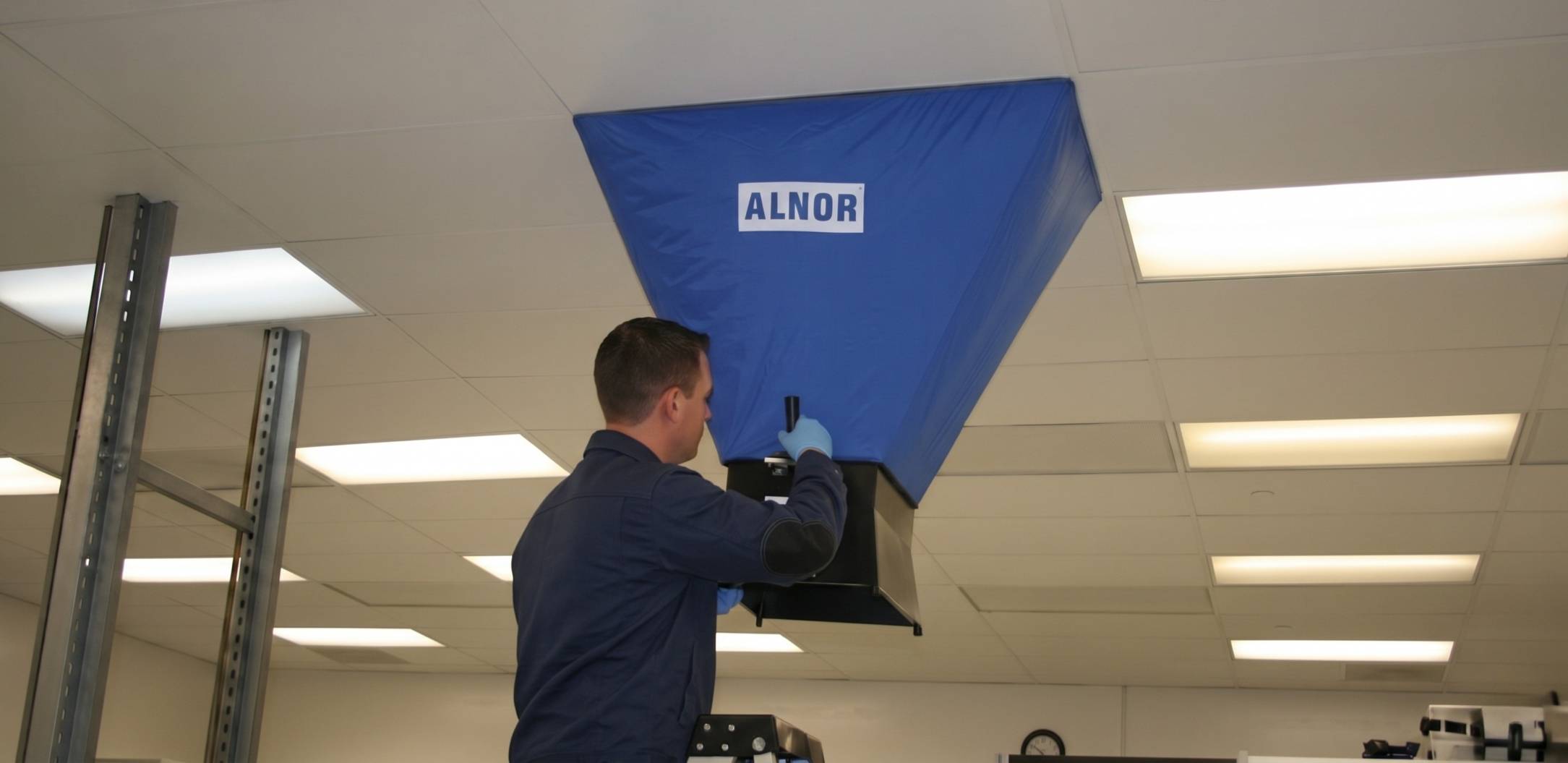





Our assessment identifies deviations between design specifications and actual system performance. We map pressure gradients across supply and return networks, measure terminal velocity at diffusers and grilles, and document baseline conditions along with air make-up unit analysis. Our technical evaluation establishes the foundation for targeted corrections.
We methodically adjust balancing dampers throughout your ductwork to establish proportional airflow distribution. Our approach accounts for friction losses, pressure drops across fittings, and dynamic conditions inherent to operating systems. Our careful damper positioning ensures each zone receives its designated air volume without creating turbulence or noise.
We verify performance at supply registers, return air grilles, and exhaust points to ensure airflow quality and acoustic standards. Our technicians adjust diffuser patterns, confirm proper volume delivery, and eliminate high-velocity zones that create discomfort. We coordinate terminal adjustments with damper settings to maintain system balance.
Air Dynamic Solutions air balancing HVAC Toronto establishes and documents proper static pressure relationships across your system to sustain design performance under varying operational conditions. This calibration supports system stability, prevents filter pressure bypass, and maintains efficiency across seasonal demand fluctuations.
Our team combines commissioning knowledge with hands-on experience across diverse building types, equipment configurations, and operational demands.
We employ calibrated instrumentation that meets industry standards, ensuring measurement accuracy and documented performance verification.
We schedule and execute balancing work to support minimizing disruption to facility operations while maintaining thoroughness and accuracy.
We provide supporting mechanical services, including duct cleaning, filter optimization, and system maintenance, to sustain balanced performance over time.

Design documents specify target airflow volumes for each zone or terminal, so we conduct site measurements to compare actual delivery against design intent. When measured values deviate from specifications by more than acceptable tolerances, balancing adjustments restore proper distribution.
Thermostat adjustments address temperature setpoints but do not correct underlying airflow distribution problems. If one zone receives excessive airflow while another receives insufficient delivery, thermostat changes cannot solve the maldistribution. Balancing addresses root causes by ensuring proper airflow routing throughout your system, allowing thermostats to manage temperature effectively.
Upper-floor zones in tall buildings often receive less supply airflow due to pressure losses in vertical ductwork. Similarly, corner offices and perimeter spaces may have unbalanced return air paths. Facilities with multiple divided floor plates typically need zone-specific balancing.
Properly balanced systems maintain performance characteristics for extended periods, and system drift occurs gradually through filter loading, damper drift, or operational changes. We recommend periodic measurement verification every 2–3 years for facilities with significant operational changes or comfort concerns, or on a longer cycle for stable environments.
Contact our team to schedule a system assessment, discuss balancing procedures, or arrange airflow verification for occupied facilities.
This website uses cookies to enhance navigation, analyze site usage, and provide relevant content and advertisements. By using this website, you agree to our use of cookies as described in our Privacy Policy. You may accept, reject, or manage optional cookies at any time.