
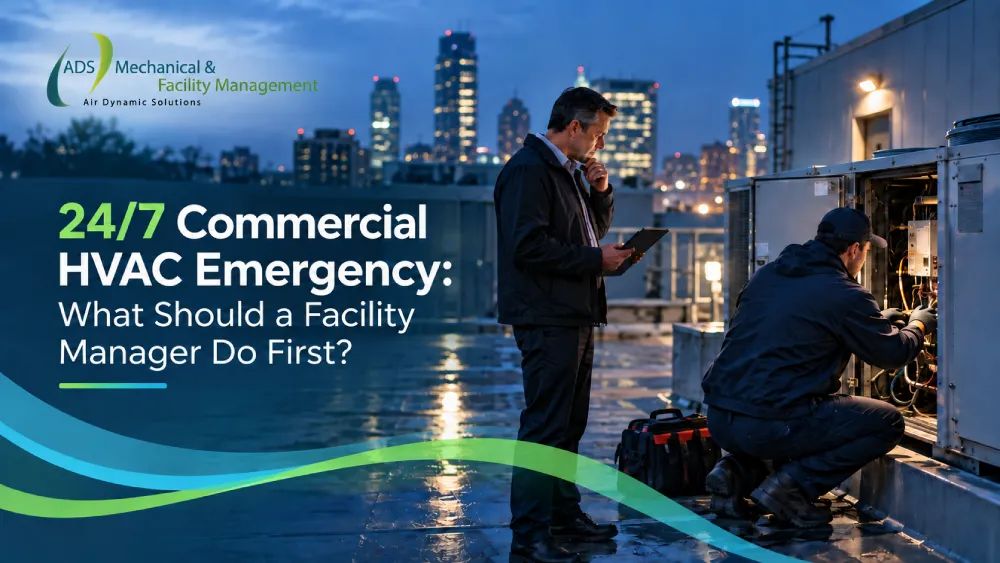
A sudden breakdown in a commercial climate control system places immense pressure on facility managers to protect structural infrastructure, business operations, and indoor safety. Disrupted daily workflows, spoiled temperature-sensitive inventory, or total building closures are all real risks when key heating and cooling units fail unexpectedly. Executing an organized, tactical response begins with an immediate physical assessment to pinpoint the exact nature and scale of the failure before calling for mechanical support. This rapid initial check differentiates between a standard repair requirement and a true, high-priority commercial HVAC emergency Toronto dispatch.
Total electrical system shutdowns represent the most severe failure scenario because the complete loss of power cuts off vital ventilation airflow across high-occupancy office zones or server rooms. Without constant air exchange, ambient room temperatures will spike to hazardous thresholds within hours, creating an active threat to delicate data hardware and worker health. Physical warning indicators such as loud metallic screeching, pungent electrical burning smells, or large pools of leaking chemical refrigerant also demand an immediate shutdown before repair crews arrive. This guide explains how to find the right agency to serve your facility round the clock.
Protect Occupants and Critical Equipment
Address Safety Risks
The physical safety of building occupants remains your absolute highest priority whenever a primary climate system fails. Airtight modern structures cause indoor air quality to degrade rapidly, requiring an immediate, orderly evacuation if you detect metallic smoke or toxic chemical odors. Clear communication with your building safety team allows you to open manual ventilation dampers quickly, helping fresh air circulate across vulnerable zones.
Safeguard Temperature-Sensitive Assets
High-value electronic hardware and data centers face an immediate operational threat when internal climate control drops offline. Servers can overheat within a few short minutes, triggering sudden automatic shutdowns or permanent component damage. Deploying portable cooling assets or industrial fans right away establishes a protective cross-breeze, while moving sensitive medical or perishable inventory prevents inventory loss before temperatures pass safe limits.
Perform a Basic System Assessment
Check Power Supply and Thermostat Settings
A quick check of the main electrical panels can reveal a tripped circuit breaker or a blown high-voltage fuse caused by a sudden building-wide power surge. Inspecting the manual external safety disconnect switches next to the roof units ensures a previous maintenance crew did not accidentally leave them off. Verifying that the central control panels are configured to the correct operating mode and swapping out dead thermostat batteries can quickly restore system control.
Look for Visible Issues
Clogged, dust-saturated air filters restrict internal airflow so severely that they cause evaporator coils to freeze over into a solid block of ice. Sludge or algae accumulation inside the primary condensate drain lines can trip a safety float switch, cutting off compressor power instantly to save your ceilings from severe water damage. Scanning the outdoor units for blown trash, plastic bags, or overgrown bushes helps prevent high-pressure heat overloads.
Contact a 24/7 Commercial HVAC Emergency Service
Provide Key System Information
Gathering the essential mechanical specifications from equipment data plates or maintenance logs ensures the repair coordinator dispatches the ideal specialist. Sharing precise equipment layouts, brand names, model numbers, and system age allows the team to pull the correct wiring schematics before leaving the shop. This thorough preparation ensures that the arriving technician carries matching, compatible replacement hardware directly on their truck for a faster fix.
Explain Symptoms and Urgency
Describing distinct mechanical warning signs like silent ventilation fans, pungent electrical smells, or active water leaks allows the dispatcher to gauge the crisis accurately. Sharing your basic assessment results proves that essential troubleshooting is already complete and rules out simple power issues immediately. Quantifying the real-world operational impact, such as a data server room passing critical temperature limits, ensures the service team prioritizes your emergency HVAC repair Toronto call.
Implement Temporary Measures
Maintain Occupant Comfort
You have to deploy heavy-duty industrial fans or portable air movers across high-traffic zones. This establishes immediate air circulation to make warm spaces feel bearable. Similarly, lowering all interior window blinds and solar shades on the south and west-facing walls blocks direct sunlight from radiating into office spaces. You should also send a brief building-wide message to relax standard corporate dress codes and help staff stay comfortable while the climate systems remain offline.
Minimize Operational Disruptions
You should shut down large copier machines, non-essential computer monitors, and extra lighting fixtures immediately. This reduces the internal heat load building up inside your facility. Also, relocate your staff from localized failure zones into comfortable, working spaces. It allows daily business routines to continue without complete office shutdowns. Pausing or staggering the use of heat-generating production equipment also prevents indoor temperatures from passing critical thresholds.
Document the Incident
Record Symptoms and Timeline
Establishing a chronological live log of the exact moment a climate disruption occurs captures critical initial temperature readings and reporting sources. Recording the outside weather conditions provides valuable context regarding how fast the internal building environment degraded. Documenting every immediate action step, such as checking breakers or placing the official dispatch call, protects you from liability while keeping senior management fully updated.
Track Repairs and Service Actions
Logging the repair crew’s precise arrival time and initial diagnostic findings ensures complete alignment before heavy mechanical work begins. Maintaining an itemized record of all replaced components, software updates, and added refrigerant volumes builds a transparent history of the service event. Saving final invoices, digital photos of failed hardware, and written warranty documents in a central digital file simplifies future commercial insurance claims.
Prevent Future HVAC Emergencies
Schedule Preventive Maintenance
You should implement a comprehensive and four-times-a-year maintenance schedule with a professional mechanical provider. It catches hidden component wear before extreme weather arrives. Regular technical cleanings of condenser coils, electrical contacts, and condensate drain lines drastically reduce internal operating pressures. Replacing primary air filters at least once a month prevents severe airflow restriction. It shields your expensive fan motors from premature failure.
Monitor System Performance
Upgrading your facility to use smart building automation systems allows you to continuously track live supply air temperatures and energy usage spikes. Programming the monitoring software to send automatic digital alerts immediately flags any machinery operating outside its optimal parameters. Routine physical walkthroughs of mechanical rooms also help your team catch minor fluid leaks or unusual clicking noises during normal business hours.
Establish an Emergency Response Plan
Drafting a concise, step-by-step emergency playbook ensures your staff knows the exact locations of all master electrical disconnects and data server protection protocols. Saving the direct phone numbers of your 24/7 commercial HVAC emergency services Toronto and equipment rental vendors in a central digital file keeps vital contacts accessible. Regular review sessions guarantee that every building engineer can manually open ventilation dampers during a sudden crisis.
Final Analysis
When a failure occurs, you should respond quickly and contact professional commercial HVAC emergency service. This ensures that certified technicians arrive with the correct diagnostic tools to resolve the issue before indoor temperatures reach dangerous levels. Keep in mind that while a fast response manages the immediate crisis, investing in a structured preventive maintenance program is the most valuable step you can take. Consistent upkeep with a reputable agency like Air Dynamic Solutions drastically reduces unexpected downtime. It ensures your facility’s infrastructure remains reliable.
FAQs
What should I do during a commercial HVAC emergency?
Your first step should be to prioritize life safety by checking for hazards like electrical sparks, smoke, or gas odors. If any are present, evacuate the building immediately.
Who do I call for a commercial HVAC emergency in Toronto?
You should contact an established commercial mechanical contractor. Always verify that you are calling a specialized industrial provider rather than a residential repair company.
What is considered an HVAC emergency for a commercial building?
An HVAC situation climbs to an emergency level if it directly threatens life safety, structural integrity, or business revenue. Common commercial triggers include a complete loss of heat during freezing winter months or total cooling failure in data centers or server rooms.
How quickly can an emergency HVAC technician respond?
Response times can fluctuate depending on severe weather spikes that cause widespread equipment failures. But emergency dispatch networks prioritize high-impact commercial clients to keep facilities running safely.