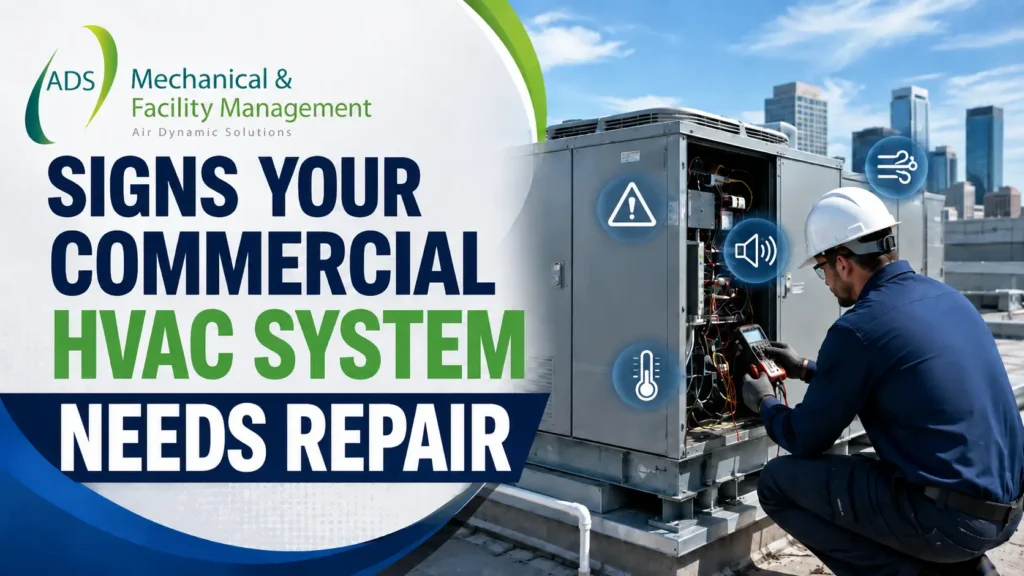
Unlike residential systems, commercial HVAC setups act as the core operational foundation for a facility’s financial and regulatory health. In modern enterprise environments, cooling covers roughly 50% to 70% of summer energy costs. Optimized air filtration and ventilation loops boost occupant cognitive function and employee productivity by 11%. Meanwhile, a single localized system failure can result in immediate inventory destruction, equipment overheating, or a complete operational shutdown. The climate in Dallas presents a uniquely brutal operating environment for commercial rooftop units and chiller plants. That’s why commercial HVAC repair services are crucial to keep the system running smoothly in such an extreme environment.
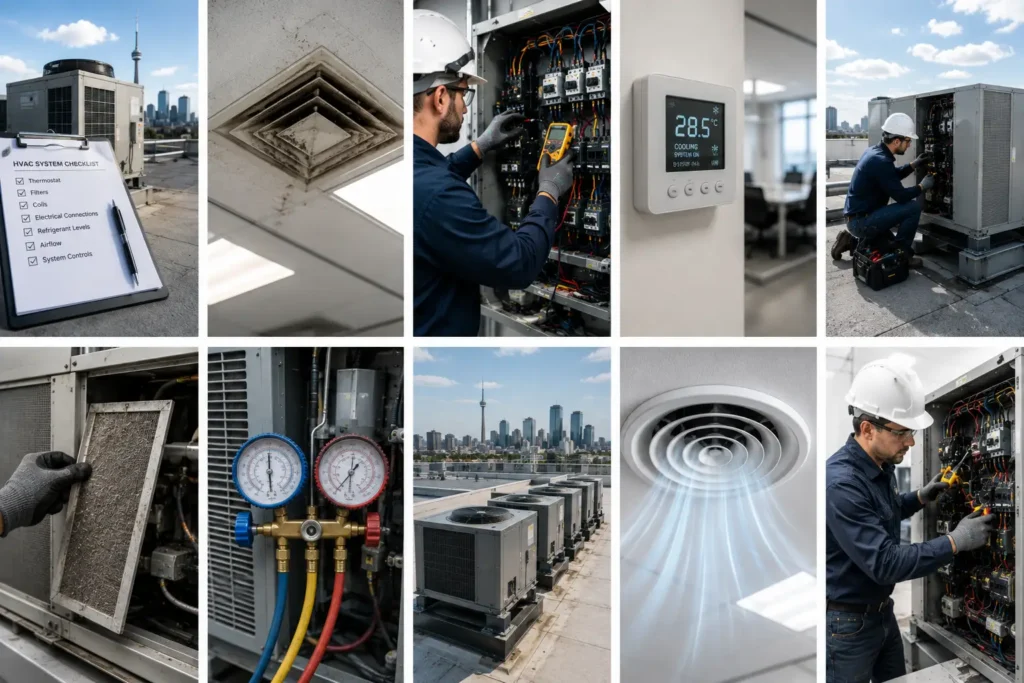
Local extreme thermal envelope forces the system’s compressors to run continuously rather than cycling. It dramatically elevates internal condensing pressure and accelerates the degradation of refrigerant oils. Proactively diagnosing early degradation markers is the single most effective way to protect a facility’s bottom line from catastrophic failure. Waiting for a commercial system to completely break down triggers expensive emergency repair premiums, rush technician logistics fees, and crippling business downtime. Catching a minor issue like a failing fan belt or a small refrigerant leak early prevents a destructive domino effect. It safeguards the system’s overall operational lifespan and mitigates major insurance claims. This guide explores the core signs that your emergency HVAC repair services are needed immediately.
What are signs of HVAC failure?
Uneven Cooling/Heating
Thermal stratification and localized hot or cold spots across a commercial floor plan are rarely just comfort issues. They usually indicate a severe breakdown in system aerodynamics and static pressure balances. When a commercial system encounters excessive airflow resistance, the static pressure increases well above the standard 0.5 inches of water column engineering baseline.
This pressure spike starves the terminal zones furthest from the central air handler, leading to weak volumetric airflow. Similarly, system remodeling or zone changes without updating the modulating VAV dampers will permanently disrupt air balancing. It strains the main blower motor and causes widespread temperature inconsistencies.
Rising Energy Bills
An unexplained increase in a facility’s monthly utility bill often signals hidden mechanical degradation. It may also show a loss of thermodynamic efficiency within the core equipment components. Delayed maintenance items force the compressor to operate with highly elevated head pressures.
This operational strain spikes the unit’s instantaneous energy consumption. Because commercial utility billing relies heavily on peak demand charges rather than total monthly energy consumption, an inefficient HVAC system running continuously during peak hours can cause a business’s energy expenses to surge dramatically.
Frequent Cycling
This is also called short cycling. It happens when a commercial rooftop unit or chiller starts its cooling run but abruptly shuts down within 3 to 5 minutes, repeating this pattern up to several times an hour. This quick on-and-off cycle cuts the standard 15-to-20-minute operational block short.
It prevents the system from moving enough air to dehumidify the building or even out temperature zones. The root causes of short cycling range from oversized equipment selection to serious mechanical issues. This constant restarting severely stresses the compressor motor windings. It drastically shortens the equipment’s lifespan and causes a large, hidden drain on building energy efficiency.
Poor Indoor Air Quality
When a commercial HVAC system begins to fail, the indoor environment often sees a sharp increase in particulate matter, VOCs, and stagnant gases. If a system cannot supply enough fresh outdoor air, indoor carbon dioxide levels will quickly increase above the recommended 800 to 1,000 ppm threshold.
This poor air exchange leads to occupant drowsiness, lower concentration, and an accumulation of airborne contaminants. Similarly, if the system’s dehumidification cycle fails or its condensate drainage pans clog, indoor relative humidity can easily go above the 60% ASHRAE comfort limit. It creates a prime environment for mold growth inside the ductwork and releases musty odors through the supply vents.
Visible Refrigerant or Fluid Leaks
A structural pool of fluid beneath an air handler or a frozen mass of ice blanketing the indoor evaporator coil is an explicit mechanical indicator of a sealed system breach. A drop in internal system charge causes the evaporator saturation temperature to plunge well below freezing. It turns normal humidity runoff into an insulating block of ice that chokes off all thermal transfer.
Concurrently, synthetic Polyolester oils travel dissolved inside the refrigerant stream to keep internal components lubricated. That’s why a chemical gas leak will leave behind an oily, dark residue along joints and service ports. If left ignored, this loss of fluid starves the compressor of necessary motor cooling. It initiates rapid oil breakdown, leading directly to severe, unrecoverable mechanical lockups.
Pungent, Burning Plastic Odors
The emission of sharp, chemical, or plastic-like burning scents through the supply registers signals immediate and dangerous electrical thermal degradation. These pungent odors occur when current spikes overwork loose connections, faulty runtime capacitors, or undersized disconnect blocks.
They drive wiring temperatures above their standard 60°C to 90°C engineering limit. At this point, the outer thermoplastic insulation undergoes off-gassing and starts to melt long before a visible fire erupts. Ignoring these acrid scents can result in a destructive electrical short circuit. It can permanently fry main system control boards or scorch the fan motor windings until they fail.
Repeated Breaker Tripping
When a dedicated commercial circuit breaker trips multiple times, it is not an electrical glitch. It is an active safety intervention protecting the building from catastrophic line damage. Repeated breaker trips mean the system is experiencing a high-amperage electrical fault.
If mechanical components seize or an internal short circuit happens, the unit will attempt to draw excessive current that easily goes beyond its engineered overcurrent protection threshold. Continually resetting a tripped breaker without diagnosing the root mechanical resistance risks completely melting the facility’s power distribution panels and destroying the unit beyond repair.
What causes HVAC breakdowns?
Lack of Maintenance
Neglecting routine preventative service is the leading driver of premature system failure. It directly causes a staggering 42% of all commercial HVAC downtime. When a facility relies on reactive “run-to-failure” practices rather than scheduled inspections, minor mechanical deviations go undetected and trigger a destructive domino effect.
This physical degradation raises a system’s electrical current draw by 8% to 15% long before any temperature complaints register at the thermostat. Furthermore, up to 80% of catastrophic compressor failures are the direct result of unaddressed maintenance items that escalated over time.
Dirty Filters and Coils
Allowing particulate matter to accumulate on air filters and heat exchanger coils completely cripples the thermodynamic efficiency of a commercial system. When multi-layer air filters become packed with airborne dust and soot, volumetric airflow is severely restricted. It forces the blower motor to pull extra amperage to overcome the increased static pressure.
Simultaneously, dirty condenser and evaporator coils act as a literal insulation blanket. Even a minor 10% layer of soil on a coil increases total energy consumption by up to 15% while heavily slicing total cooling capacity. This lack of proper heat transfer forces the compressor to run with elevated head pressures and abnormally high internal temperatures. It causes the refrigerant oils to break down chemically and induces sudden mechanical lockup.
Electrical Faults
They represent the second largest cause of system downtime, accounting for 23% of all documented commercial HVAC breakdowns. The continuous, heavy vibrations generated by large commercial air handlers slowly back out wiring terminal screws over time, introducing severe hazards.
Loose wiring links create small air gaps where electrical current jumps, resulting in arcing, extreme localized heat buildup, and terminal burnout. This electrical resistance starves the motor of clean voltage, forcing components to operate under intense thermal stress until they pit, weld shut, or pop entirely. If left unchecked, these voltage fluctuations cause the electrical insulation surrounding the compressor motor windings to melt.
Overuse in Extreme Weather
Sustained extreme weather conditions force commercial cooling equipment to run outside its intended engineering design envelope for days on end. When regional summer heat waves push ambient outdoor temperatures above 37.7°C, the massive thermal load prevents the outdoor condenser from rejecting building heat efficiently.
Because the system cannot satisfy the thermostat, the compressor is forced into continuous, non-stop operation rather than its standard cycling schedule. This intensive, 100% operational duty cycle deprives internal motor windings of the cool suction gas needed to prevent overheating.
When should HVAC be repaired?
Immediate Repair When Cooling Stops
A complete failure of a commercial HVAC system is an operational crisis that demands an immediate service call. When an air handler completely stops delivering conditioned air during peak business hours, the indoor heat load rises rapidly. It threatens valuable inventory, data servers, and critical facility electronics.
From a business standpoint, waiting to address a total system shutdown introduces steep liability costs. Under OSHA regulations, letting building temperatures spike above unsafe thresholds can result in costly operational stoppages. Getting emergency commercial HVAC repair services out immediately ensures certified technicians can troubleshoot the system’s high-pressure lockouts or failed contactors.
Preventive Servicing Before Peak Season
Scheduling deep, preventative maintenance tune-ups one to two months before the summer heat wave hits is the most effective way to maximize system runtime and slice seasonal operating budgets. Proactive structural HVAC service cuts overall cooling energy consumption by over 20% while extending equipment lifespans.
Catching microscopic system wear during the mild spring months allows facility managers to plan repairs during standard business hours. It completely bypasses the steep emergency labor rates and long technician wait times common during summer peak demand. Similarly, keeping the heat exchangers clean ensures the system operates at its optimal COP. It prevents hidden component strain when outdoor temperatures rise.
Urgent Signs to Act On
Ignoring early mechanical warning signs guarantees that a minor component fix will eventually turn into a capital-intensive equipment breakdown. Symptoms like pungent burning smells, persistent metallic banging, and constant circuit breaker tripping are considered high-priority mechanical alerts to take commercial HVAC repair services.
For instance, a repeating circuit breaker trip means a motor winding is dangerously drawing excessive amperage. It risks a severe electrical fire inside the building’s main power distribution panels if forcefully reset. Similarly, visible water stains along ceiling tiles or pooling water beneath an indoor air handler point to a blocked condensate pan or a frozen evaporator coil.
Final Analysis
Identifying the issues early and getting commercial HVAC repair services promptly can save you thousands of dollars while keeping your indoor facility environment stable. However, if you ignore a minor issue for a while, it turns into a catastrophic problem within days. A professional commercial HVAC troubleshooting service helps you run your system at peak efficiency without downtime. If you want a specialized HVAC repair shop in Toronto, you can contact Air Dynamic Solutions to get your HVAC system back to its peak performance.
FAQs
Why is my HVAC not cooling?
Your system is likely suffering from a structural refrigerant leak that has caused low charge and frozen coils, or it has heavily fouled coils and filters blocking vital thermal transfer.
Why is my HVAC making noise?
Harsh metallic rattling indicates that operational vibrations have backed out panel fasteners. High-pitched squealing points directly to dry, slipping drive belts. Deep grinding sounds mean internal motor bearings have lost lubrication and are failing.
Can HVAC be repaired the same day?
Yes, standard mechanical failures can typically be repaired on the same day if a certified technician has the components stocked on their service vehicle. However, complex issues will usually require multiple days by HVAC contractor.
How much does HVAC repair cost?
Minor electrical or mechanical fixes generally range from $150 to $450. Mid-tier repairs run between $400 and $1,000, while catastrophic failures can easily cost $1,500 to $4,500+ depending on system tonnage.
Should I repair or replace HVAC?
Apply the “$5,000 Rule,” which means multiply the age of your commercial unit by the cost of the requested repair. If the total exceeds $5,000, you should replace the system. If your equipment is over 15 years old and relies on obsolete R-22 chemical refrigerant, investing in a modern system is the better choice.