Indoor comfort is highly important in both residential and commercial buildings. Behind every building’s temperature control, HVAC systems stand, providing consistent heating and cooling services. These systems ensure a reliable environment, effectively managing humidity and airflow. The type of system installed directly affects energy efficiency and budget as well. So, when it comes to selecting between commercial HVAC vs residential HVAC, the best system is one that fulfills your building needs effectively.
Commercial and residential HVAC systems share the same basic goal of maintaining temperature across the building. They differ sharply in design, scale, and complexity. It is important to recognize these differences, as they help homeowners avoid oversized or undersized equipment. This guide explains the core differences between the two and how to choose the right HVAC installation based on your needs and your building demands.
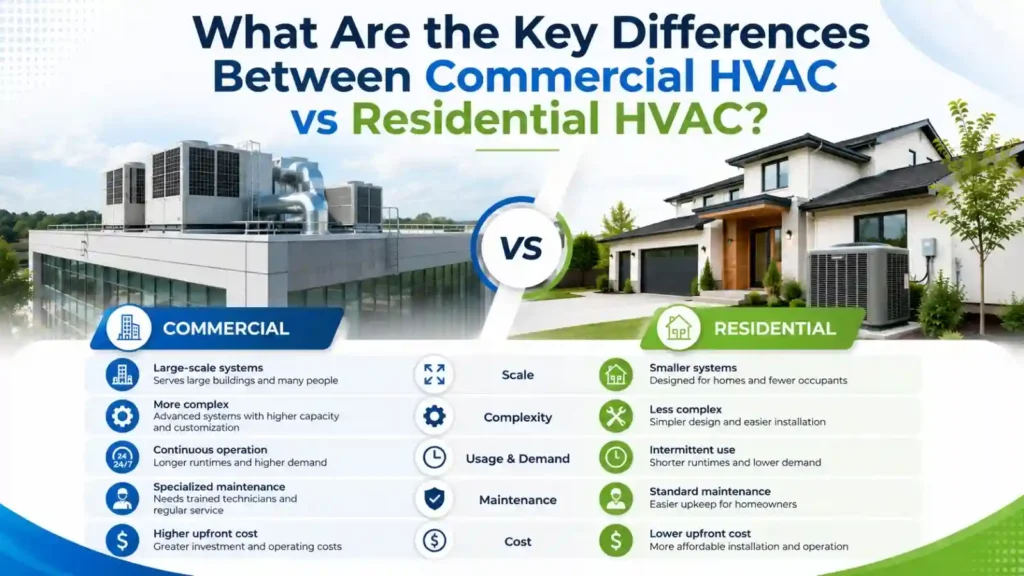
What Are the Key Differences Between Commercial HVAC vs Residential HVAC?
Purpose of Use
A home setup serves one family, in one space, with fairly predictable needs. A facility setup serves dozens, sometimes hundreds, of people across a much bigger space. That difference in purpose shapes almost every design choice that follows. Equipment built for a house rarely translates well to a warehouse or office tower.
System Design
Home equipment tends to follow a straightforward layout, including one unit, one thermostat, one job. Facility equipment often includes multiple components working together across different zones. This added complexity isn’t excessive; it’s necessary. Bigger spaces need more coordination to stay comfortable.
Performance Needs
A house mainly needs steady comfort during normal hours of use. A busy facility needs equipment that performs under constant, heavy demand, sometimes around the clock. That gap in expectations drives real differences in build quality and component strength. Equipment built for light use simply won’t survive nonstop operation.
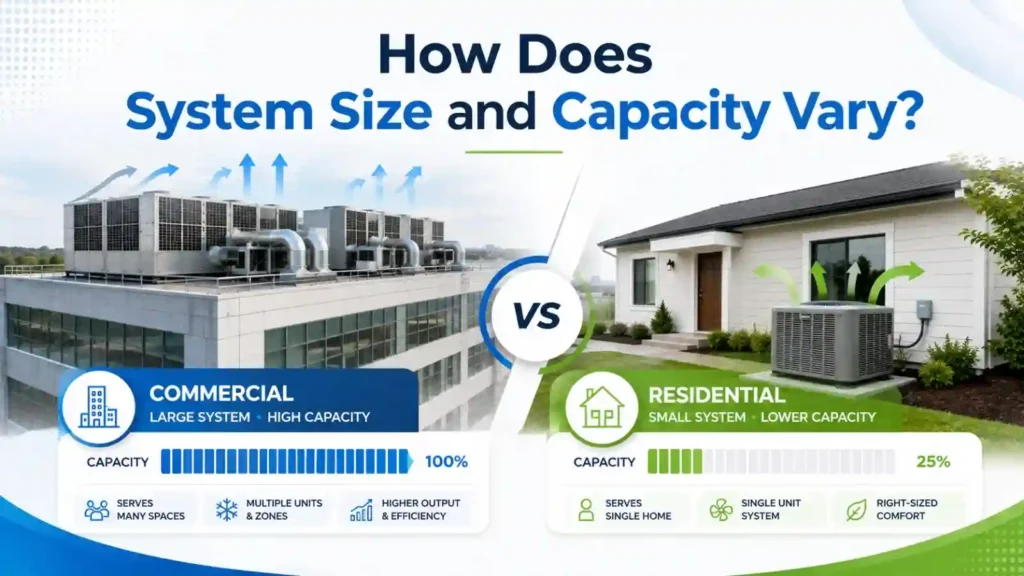
How Does System Size and Capacity Vary?
Residential Range
Most homes run on equipment rated under five tons of cooling capacity. This range applies to small apartments, large houses, or anything that comes under residential tag. Their system sizing depends on square footage and layout. Going bigger than necessary wastes energy and adds cost without bringing more comfort.
Commercial Range
Facility equipment operates on a completely different scale, often under 500 tons or more. That wide range reflects how much variation exists between building types. A small office needs far less capacity than a large warehouse. That’s why business owners need to do careful calculations for accurate sizing.
Load Handling
A house only has to manage a handful of people at once. A facility might handle hundreds of occupants throughout the day, and more people means more heat. The systems have to manage more moisture and more strain on the equipment. Load calculations scale up fast once occupancy grows.
Energy Demand
Home equipment cycles on and off, running only when needed. Facility equipment often runs nonstop to keep pace with continuous activity. That constant operation demands sturdier components built for sustained draw. Moderate, intermittent use simply asks less of the equipment.
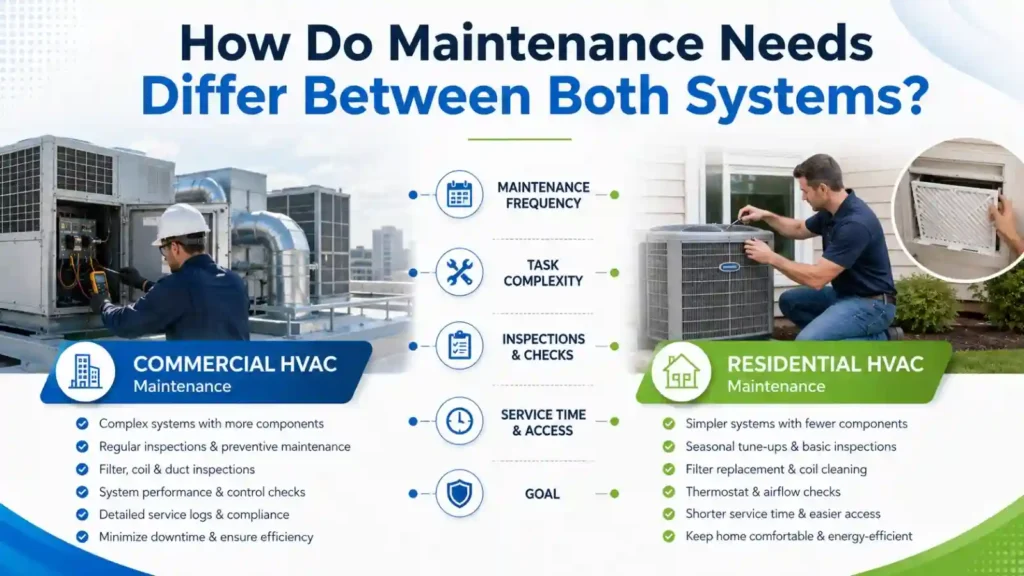
How Do Maintenance Needs Differ Between Both Systems?
Residential Care
In homes, a checkup at least twice a year is crucial to maintain the indoor air quality effectively. It should cover coil cleaning and filter changes along with a quick performance check. Only a single short visit can handle the majority of the work. Seasonal care is usually enough to keep a home system running well.
Commercial Care
Facilities need far more frequent attention than homes. This is because of their large setups, rooftop HVAC units and bigger systems, and complex mechanisms. They usually demand continuous operation, which puts more strain on components and requires closer monitoring. Skipping inspections in facilities risks bigger and costlier breakdowns down the line.
Technician Skill
A general technician can usually handle most home repairs without issue. Facility equipment often needs specialists trained on chillers, automation, or specific brands. That specialized knowledge adds cost but ensures the work gets done right. Complex systems demand equally specialized expertise.
Downtime Impact
A short outage at home is no more than an inconvenience. A facility outage can halt operations, cost revenue, or create safety risks. That difference in stakes shapes how seriously downtime gets treated. Facilities plan around avoiding outages; homeowners simply wait them out.
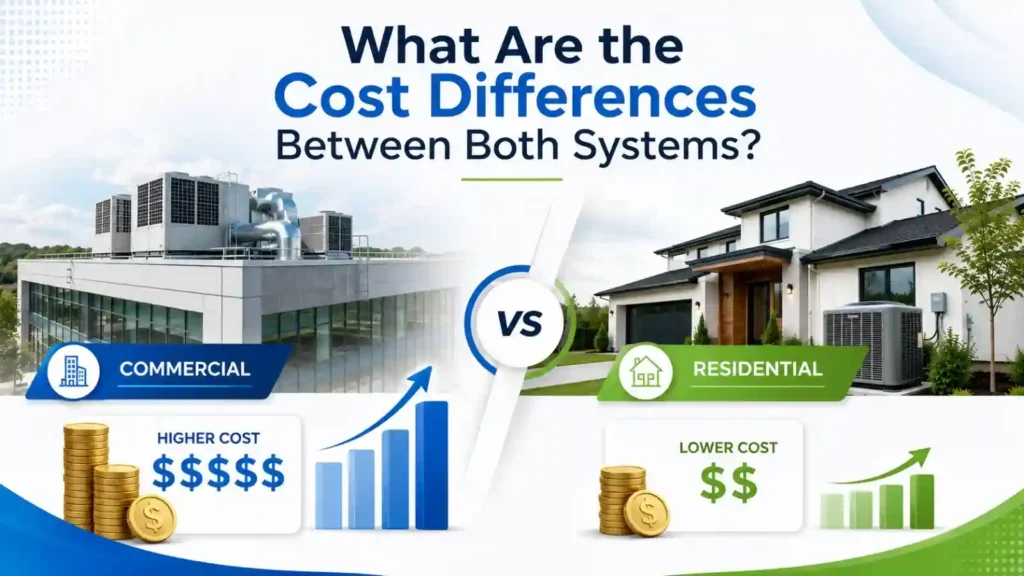
What Are the Cost Differences Between Both Systems?
Initial Investment
A home setup costs far less to install than a commercial HVAC system. Facility systems demand a much bigger investment because of system size and complexity. That gap reflects the scale of what each setup has to handle. Bigger buildings simply need larger budgets from the start.
Maintenance Costs
Home maintenance stays affordable, thanks to simpler equipment and shorter service visits. Facility maintenance costs more, given the frequency and skill level required. Specialized parts and technicians add to that expense. Complexity, once again, drives the price difference.
Energy Bills
A house runs up a moderate energy bill, tied to its size and daily habits. A facility’s energy bill can be significant, especially with continuous operation. Larger equipment simply draws more power to keep pace with demand. Efficient design helps offset some of that cost.
Long-Term ROI
Homeowners see returns mainly through comfort and modest energy savings over time. Businesses often see returns through efficiency gains that add up at scale. A facility upgrade can pay for itself through reduced operating costs. Return on investment looks different depending on what’s actually being measured.
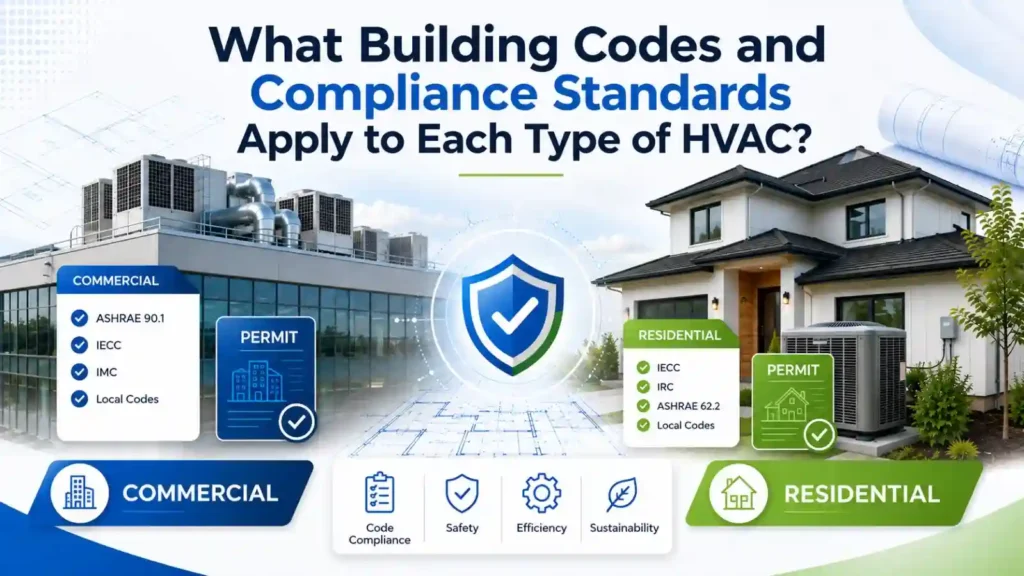
What Building Codes and Compliance Standards Apply to Each Type of HVAC?
Residential Codes
Local building codes change by region and city, and homes fall under this category. These rules cover permits, electrical connections for residents’ safety, and to prevent unwanted hazardous situations. In residential cases, compliance is quite easier and usually limited to only an initial install.
Commercial Codes
Facilities must meet broader standards, including ASHRAE guidelines and OSHA safety rules. These codes cover ventilation, worker safety, and equipment operation in shared spaces. Compliance takes more planning and often requires expert guidance. The stakes are higher, so the rules go further.
Ventilation Requirements
Homes need basic ventilation, mostly relying on natural airflow and simple exhaust fans. Facilities face strict requirements for fresh air exchange based on occupancy. Higher occupancy means higher air quality standards. Strict ventilation rules exist to protect large groups of people at once.
Legal Compliance
Meeting code at home usually means passing a basic inspection. Meeting code at a facility often means navigating multiple overlapping regulations. That complexity adds time and cost to any large-scale project. An HVAC contractor helps you maintain simpler compliance, which keeps residential projects moving faster.
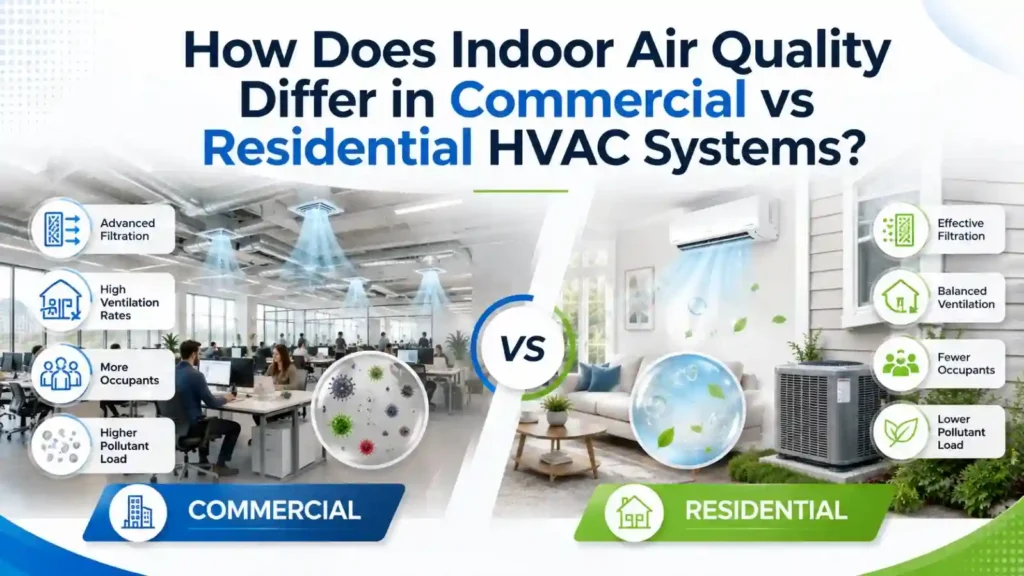
How Does Indoor Air Quality Differ in Commercial vs Residential HVAC Systems?
Residential IAQ
Homes generally rely on standard filters to catch dust and everyday particles. This level of filtration suits a lower-occupancy space just fine. They can upgrade their systems easily, but this is optional based on their home demands. Basic filtration saves cost for small homes while fulfilling their routine needs.
Commercial IAQ
The occupancy rate is higher in facilities, which is why they have to use advanced purification systems to manage pollutant loads. These setups may include enhanced filtration and monitoring technology. Bigger spaces with more people need a more active approach than smaller ones. Advanced purification stops being optional once occupancy climbs.
Fresh Air Needs
Homes need limited fresh air exchange, mostly happening passively through doors and windows. Facilities face mandatory fresh air requirements tied directly to occupancy levels. Mechanical ventilation actively brings outdoor air into these larger spaces. That active exchange replaces the passive approach used at home.
Health Impact
At home, air quality mainly affects comfort and general well-being. At work, air quality can directly affect focus, output, and even sick days. That connection raises the stakes for facility owners. Comfort matters everywhere, but productivity adds another layer of importance in the workplace.
Final Analysis
Commercial HVAC vs residential HVAC vary because a home setup and a facility setup serve varied purposes. That difference shapes everything from system size to upkeep. Homeowners should prioritize comfort and affordability while business owners need durability and efficiency. That’s why the right choice always depends on the space it’s serving. For businesses that are evaluating the best-suited options for their buildings, working with an experienced team is highly important. If you are one of them, contacting Air Dynamic Solutions for certified HVAC-R & facility management services is key to achieving stable indoor quality in your building.
FAQs
What is commercial HVAC?
It’s a temperature-management setup designed for large non-residential buildings. Large buildings, including offices, malls, and factories, all rely on this kind of equipment daily.
How is commercial HVAC different?
It’s built for bigger spaces. It is best for places that demand heavier use. It comes with stricter codes compared to those used for homes because of its system complexity and management.
Which HVAC system is better?
The right choice depends entirely on the size and purpose of the space where you want to install the system. You should consult with an expert agency like ADS for a system that saves energy while keeping your entire space comfortable.
Why is commercial HVAC more expensive?
They are based on bigger equipment and more components. They also face stricter legal standards, which all add cost. Their higher prices are due to the scale involved.
How long do commercial HVAC units last?
When you use them with proper care along with regular seasonal maintenance, they can run for many years. Their lifespan also depends heavily on usage patterns and specialized servicing.
What businesses need commercial HVAC?
All businesses, especially large ones, need a commercial HVAC system because they have to keep the bigger spaces well-maintained for their products and staff. Whether it’s an office, warehouse, or retail space, it needs it. Occupancy and equipment loads make home-grade setups impractical.
Can residential contractors service commercial HVAC?
These systems are highly complex; that’s why an ordinary home contractor can’t handle them efficiently. Facility equipment requires specialized training, so you should visit only a professional commercial-level service provider.